From Understanding Mental Patterns to Building Healthy, Lasting Connections
Introduction
Have you ever felt that your love life keeps repeating itself? Partners change, but the pain, disappointment, or feeling of abandonment always stay the same?
These repeating patterns often stem from early maladaptive schemas — deep beliefs formed in childhood that continue to shape how we think, feel, and behave in relationships.
In this article, you’ll learn what maladaptive schemas are, how they influence romantic relationships, and how you can begin to heal them.
What Are Maladaptive Schemas?
Early maladaptive schemas are deeply rooted patterns of thought, emotion, and behavior that develop from unmet emotional needs in childhood.
They act like mental lenses through which we interpret the world and our relationships.
When these lenses are distorted, we may sabotage even healthy relationships or unconsciously attract partners who recreate our old emotional wounds.
Common Maladaptive Schemas in Romantic Relationships
1. Abandonment Schema
People with this schema constantly fear being left. Even small signs of distance from their partner can trigger intense anxiety, leading to clingy or controlling behavior — which eventually pushes the partner away.
2. Mistrust/Abuse Schema
These individuals believe others will inevitably hurt or exploit them. As a result, they build emotional walls and avoid real intimacy from the start.
3. Defectiveness/Shame Schema
Someone with this schema sees themselves as “unlovable” or “not good enough.” In relationships, they may become overly dependent and seek constant reassurance, or withdraw completely to avoid rejection.
4. Dependence Schema
Here, the person feels incapable of handling life or making decisions without others. Relationships then take on a parent–child dynamic instead of a partnership between two adults.
5. Emotional Deprivation Schema
Core belief: “No one truly understands me or cares about my feelings.”
This leads the person to repeatedly choose emotionally distant or unavailable partners.
How Schemas Destroy Relationships
Schemas don’t just shape beliefs — they drive behavior.
A person with an abandonment schema may become so anxious and dependent that their partner feels suffocated.
Someone with a mistrust schema might constantly doubt and monitor their partner, even when there’s no reason.
And a person with a defectiveness schema struggles to believe they deserve love and may fall apart after minor criticism.
How to Identify Your Schemas in Relationships
-
Pay attention to your emotions during conflicts — their roots often lie in your past, not the present.
-
Notice what traits in others strongly attract or deeply upset you — they reflect your unmet childhood needs.
-
Ask yourself: “Is this reaction coming from my adult self, or from my hurt inner child?”
Healing Maladaptive Schemas in Relationships
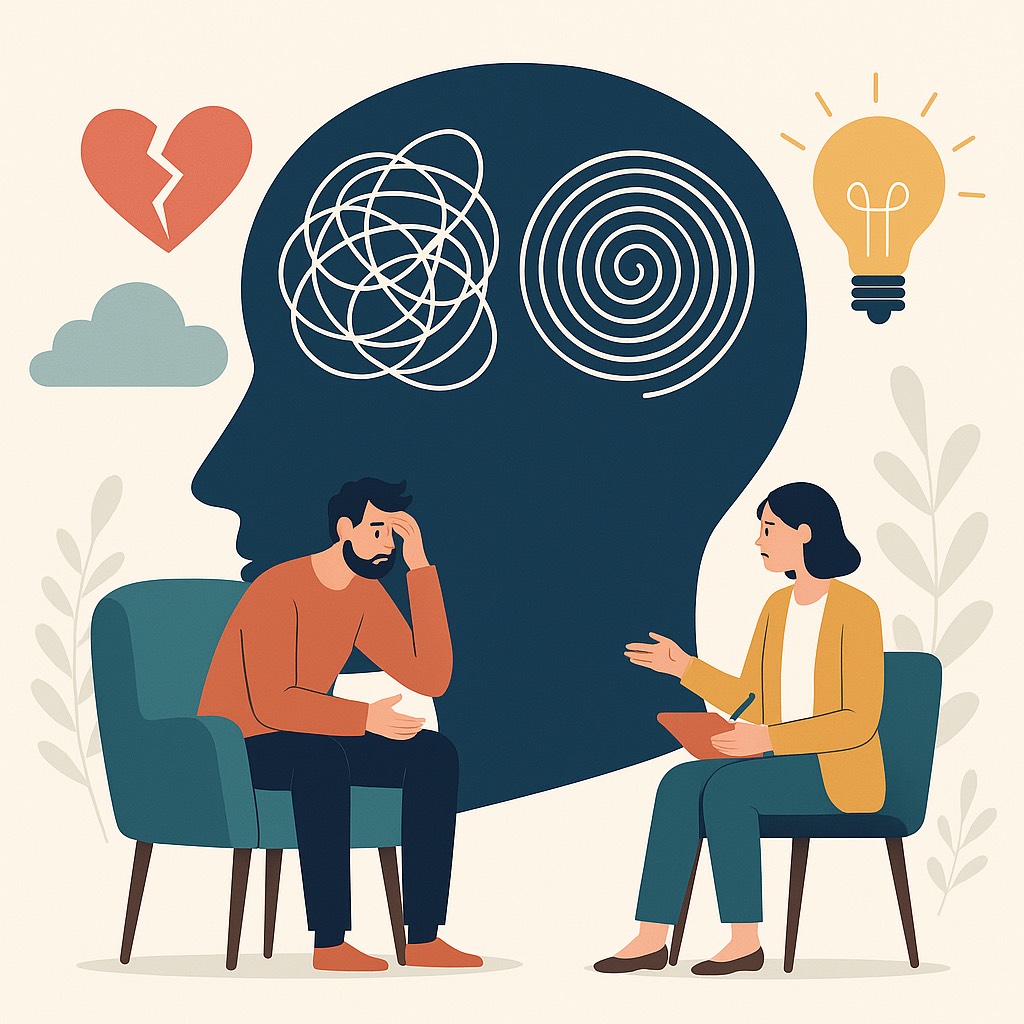
Schema Therapy is one of the most effective approaches for identifying and transforming these deep patterns.
Through this process, you learn to name your schemas, connect with and heal your inner child, express your needs in healthy ways, and build relationships based on trust, respect, and clear boundaries.
Key techniques include:
-
Guided dialogues between the adult self and the inner child
-
Imagery rescripting (healing visualization)
-
Writing letters to your schemas
-
Practicing healthy behaviors in real-life situations
Conclusion
Romantic relationships are mirrors reflecting our schemas.
Until we recognize these hidden patterns, love will keep replaying our childhood pain.
But through awareness and schema healing, we can break this cycle and enter relationships grounded not in fear of loss — but in growth, understanding, and authentic love.