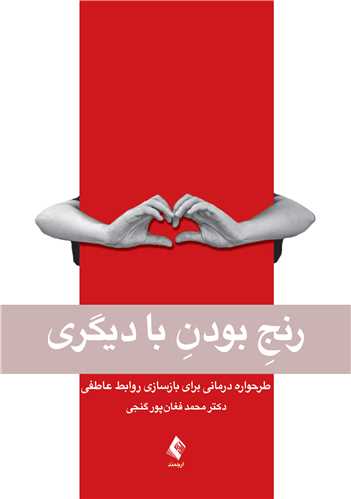
The exact name of the book: Suffering with Another: Self-Help, Schema Therapy, Emotional Relationships — Written by Dr. Mohammad Faghanpourganji
First question
First, please introduce the book you have written or translated. What topics does this book cover?
Answer: The book “Suffering with Others” is a work in the field of psychology and self-help with an emphasis on schema therapy and emotional relationships. This book examines the concept of “other” and its role in the formation of the “self.” The author shows that suffering from relationships with others is not only inevitable, but can also be considered a process of psychological shedding and the formation of a “new self.” The book helps the reader find their own path to personal and emotional growth by understanding and accepting this suffering.
Second question
What void or need led you to write or translate this book?
Answer: In the Iranian psychology space, the importance of inner suffering as a path to growth has been less addressed. Most works seek to eliminate or avoid suffering, while this book, with a new perspective, considers the suffering of relationships as an opportunity for change and redefinition of oneself. This gap in the field of scientific and public resources was the main motivation for writing the book.
Third question
Who is the target audience for this book? Is it written for specialists or can a general audience also benefit from it?
Answer: This book is written for both groups. Psychology professionals can benefit from its scientific content and therapeutic frameworks, and the general audience can also use it for self-knowledge and improving emotional relationships, due to the book’s fluent and practical language.
Question Four
What are the main themes of the book?
Answer: – Internalization of the “other” and its role in the formation of the self
– The necessity of distancing and individuation
– The role of the mental representation of another in the process of psychological development
– Facing suffering as a necessary experience for psychological change and shedding
– Integration of the “new self” into the individual’s psychological structure
Question Five
In your opinion, how much space has there been for such books in the scientific or public space of Iran?
Answer: In the scientific and public space of Iran, suffering is usually seen as a negative issue, and few works have examined it from a developmental perspective. This book deals with suffering and emotional relationships with a new approach, and there has been a lack of space for such works in the country’s psychology and self-help space.
Question Six
How up-to-date and reliable are the book’s sources and data? Has an effort been made to keep up with the latest scientific findings?
Answer: Given that the book is written by an international schema therapy instructor and supervisor, its resources are completely up-to-date and based on the latest scientific findings. The author has used up-to-date resources on schema therapy, emotion-focused therapy, attachment theory, and imago therapy.
Seventh question
How has the audience or the scientific community reacted to this book so far?
Answer: In the first month of publication, this book was included in the bestseller list of Arjmand Publications website. This reception shows that the book was written with a careful needs assessment and has been able to find a special place among the audience due to its smooth tone, comprehensiveness, and complete coverage of relevant content.
Final point
The main message of this book is that relationship pain is not an enemy to be destroyed, but an opportunity for growth and self-redefinition. If we can accept this pain and give it meaning, it will be possible to achieve a “new self” and a deeper experience of life.
To purchase this book, please visit the Arjmand Publishing website:
https://B2n.ir/Rangebodanebadigari
Social network are empty! Please check your configurations.

